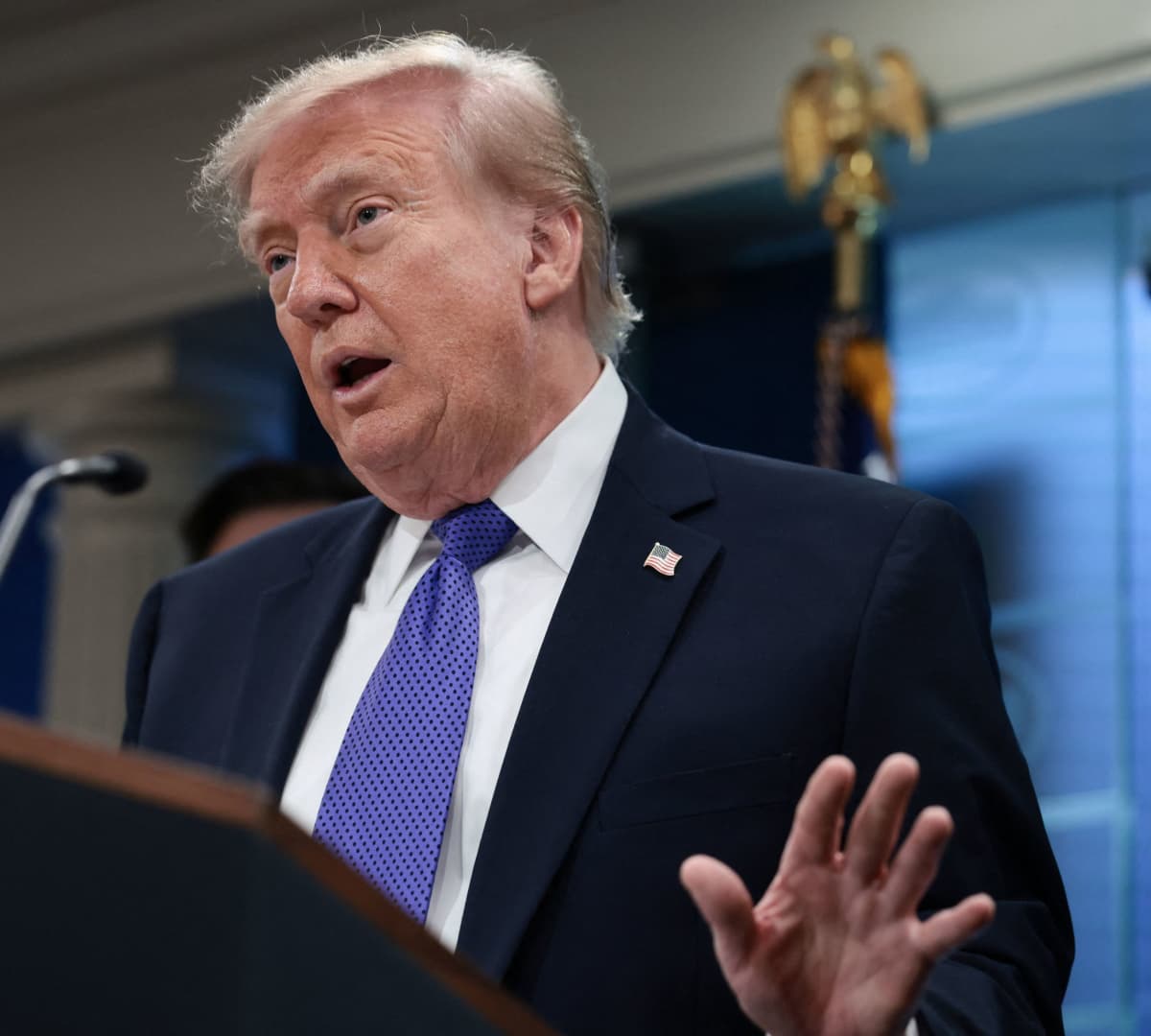
President Donald Trump suggested on Saturday that the latest intrusion into an FBI computer database could have a bright side. In an interview with Fox News, he confirmed that a system used by law enforcement at all levels to share criminal justice information had been breached, then said, "Maybe we'll learn about the voter fraud, all the voter fraud that took place," adding, "I always like to put things on a positive spin." Searching for a silver lining in a security failure of this kind is the wrong instinct for a president.
The facts reported so far are sobering. Two people familiar with the matter told MS NOW that hackers accessed the National Criminal Information Center, a database that includes FBI fingerprint records, wanted persons, violent felons, and missing persons information. The database is restricted to law enforcement use but is not classified, and it is unclear what data was extracted. CNN first reported the suspected hack, citing sources familiar with the issue. The FBI did not immediately respond to a CNBC request for comment. Those gaps matter: nobody yet knows the scope of the breach, who is responsible, or whether the stolen material has been misused.
Trump's comments also suggest a different concern. He said, "I wonder who's doing it, because wouldn't it be great to learn about Russia, Russia, Russia?" He added, "it actually put our country in danger, and so maybe we'll learn things that we wouldn't have learned otherwise." Acknowledging danger to the country is appropriate. But treating a compromised criminal records system as an opportunity to pursue a political theory about voter fraud or a foreign adversary turns a security problem into a talking point before the investigation has produced any findings.
This is also the second recent intrusion into the FBI's systems. The earlier one came in September, when a group known as "ShinyHunters" broke into an FBI jobs website, compromising data on current and former employees and shutting down part of the agency's operations until the issue was resolved. Two incidents in a few months should prompt serious questions about how the bureau protects sensitive databases, not optimism about what might be learned.
What should happen next is straightforward. The FBI should publicly confirm the scope of the NCIC intrusion, explain what data was taken, and notify anyone whose information may be exposed. Congress should demand a clear accounting of how both breaches occurred and what has been fixed. Officials should resist calling a breach a gift. The public deserves a plain account of the damage first and any political conclusions later.