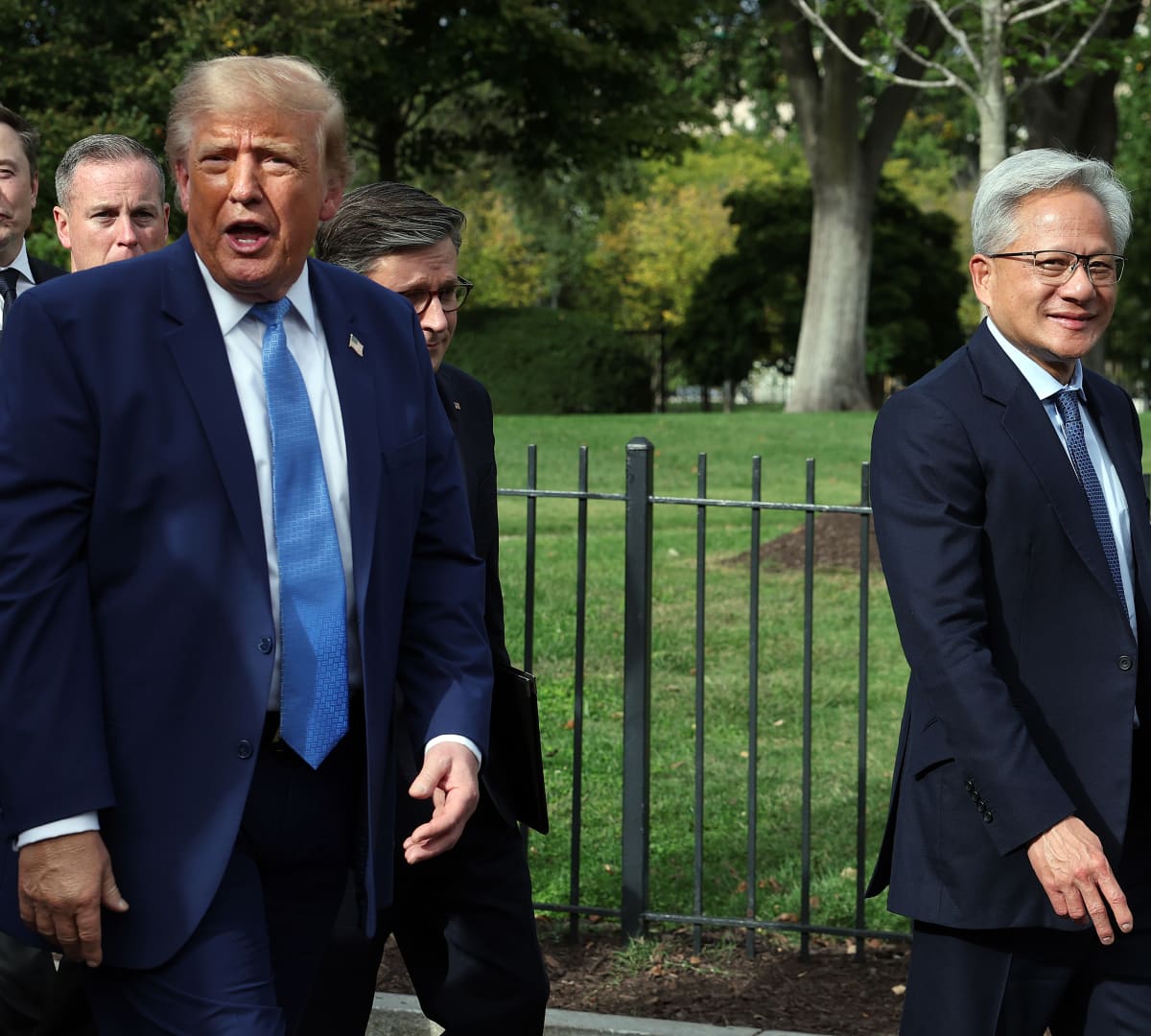
President Donald Trump has had every reason to like Nvidia. The chipmaker helped lift the stock market he likes to tout, and its co-founder, Jensen Huang, became one of his favorite businessmen. According to a CNBC analysis of Trump's financial disclosures, his investment accounts have bought or sold Nvidia shares at least 103 times since he returned to the White House, in transactions worth a combined $27 million to $97.5 million.
The timing is what should trouble anyone who cares about public trust. One sale of $500,001 to $1 million came on May 18, the first Monday after Trump returned from a state visit to China with Huang. The report says Secretary of State Marco Rubio had briefed Trump on intelligence about Huang's relationship with a woman suspected of spying for China five days earlier. Trump denied being briefed and said he did not know whether she was a Chinese spy. Those are his denials, and they should be taken seriously, but they do not close the question of why his accounts were trading so heavily in a company whose policy relationship with the White House was so close.
The defense offered is that independent advisors manage the portfolio without his input, and that the arrangement exists to avoid even the appearance of a conflict. The disclosures, as reported, show no evidence that Trump directed the trades or that advisors had access to classified intelligence. Fair enough. But a blind trust that trades more than 21,000 times in a single year, compared with roughly 500 trades in his entire first term, is not a reassuring structure. Volume like that makes it hard to say the president is insulated from the decisions his government makes about Nvidia's business in China.
The policy record is what makes the trades matter. The report describes the administration halting H20 sales, then relenting after meetings with Huang, then announcing that Nvidia could sell its more powerful H200 chips. Trading occurred around several of those moments. Nobody has shown that the trades caused the policy, and the report does not say they did. But the appearance problem is real, and Congress and the relevant agencies should ask for a clear accounting of who approved each trade, what information those approvals relied on, and whether any were reviewed against the timing of government decisions.
Trump's response to Huang's resignation, calling him a "tremendous talent" who was "going through hell" and suggesting a comeback, shows how personal this relationship has become. Public officials should not treat a corporate executive as a friend whose fortunes they can cheer, while their own accounts profit from that executive's company. The fix is not complicated: independent oversight of presidential portfolios, tighter limits on trading in companies the government regulates, and public reporting that explains trades rather than just listing them.