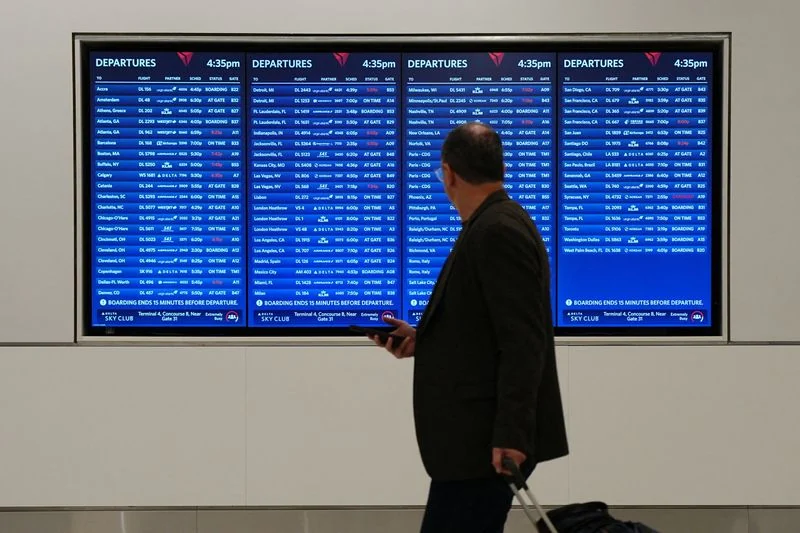
A four-hour ground stop on US flights left more than 6,600 flights cancelled and 8,600 delayed, according to FlightRadar24. It was the largest halt to US air travel since the 2001 attacks and only the third nationwide stop the Federal Aviation Administration has issued this century. Such a disruption should not be treated as routine bad luck.
Transportation Secretary Sean Duffy blamed aging network technology in the radar and communications system used for air traffic control, not malicious actors. That explanation may be accurate, but it raises an obvious question. If the core systems are old enough to fail this badly, why was the upgrade not already the priority? A government that runs one of the world's busiest aviation networks owes the public a clear timeline for replacing the equipment at the center of this failure.
The human cost was real and immediate. David Johnson, flying from Washington to San Francisco, said the greatest problem was not the delay itself but the lack of information: "I could make alternative plans if at least the duration (of the delay) was known and clearly communicated." Barbara Steinberg, an accountant from Cedar Knolls, New Jersey, faced a rebooking that likely made her miss her high-school reunion. Edward Karagbo, bound for Lome, Togo, said he was stranded at Newark Liberty International Airport and would have to spend the night there.
Some travelers were more understanding. Debra Bliesner, 71, of Corralitos, California, said she took the stoppage seriously because of her three decades in the Air Force. That patience should not be mistaken for acceptance. Even prudent safety decisions can and should come with better communication, and airlines and federal officials were not able to give travelers reliable answers while the stop lasted.
Washington should respond with two commitments. First, the FAA and Transportation Department should publish a specific plan and schedule for modernizing the radar and communications infrastructure. Second, airlines and airports should be required to provide regular, accurate updates to stranded passengers during any future stop. Travelers accepted the disruption; what they did not accept was being left in the dark.