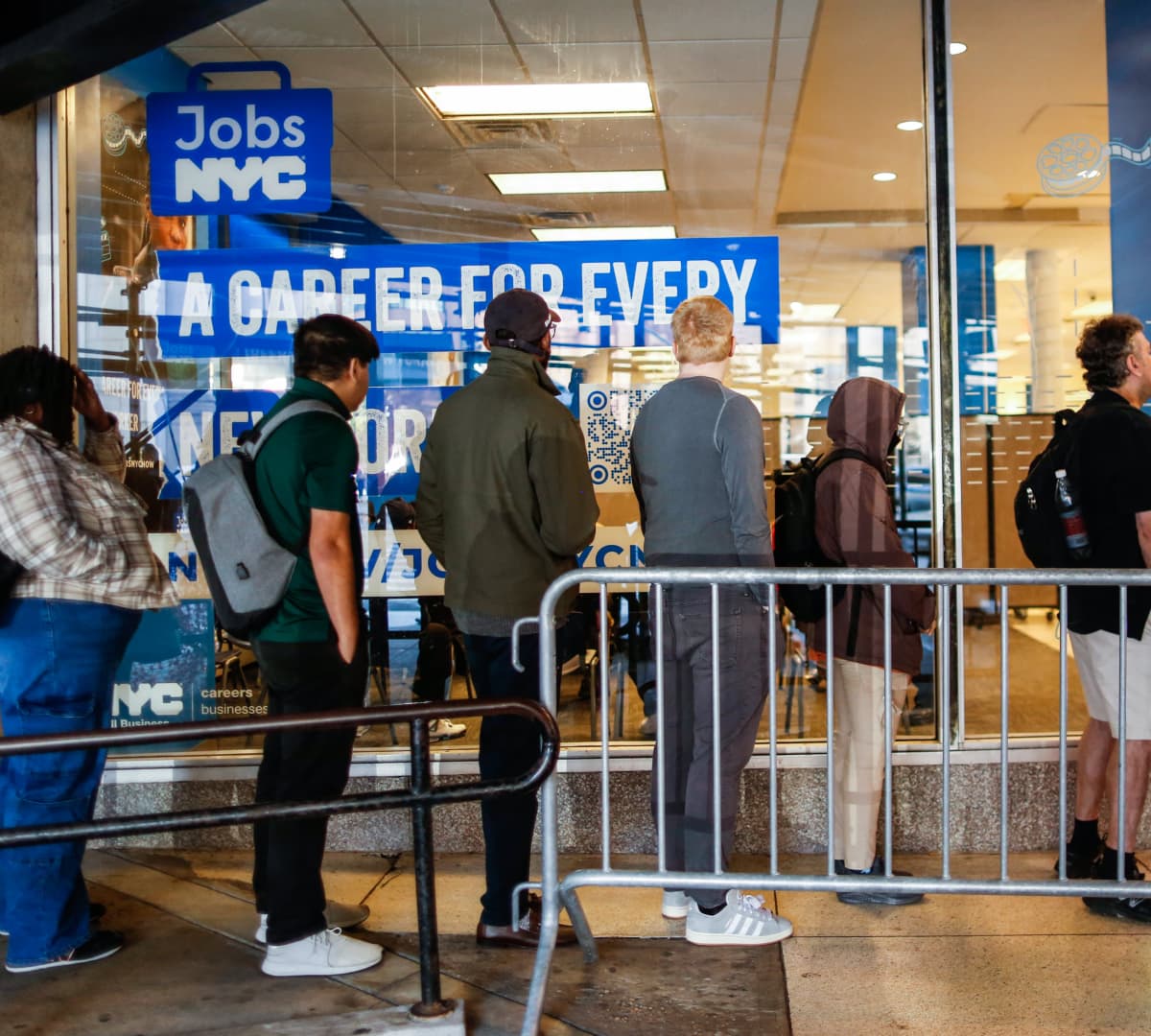
The headline numbers from the latest jobs report look reassuring. Nonfarm payrolls added 165,000 jobs in October, well above economists' forecasts, and the unemployment rate ticked down to 4.1%. Job openings also came in much higher than expected in September, and layoffs and discharges fell to their lowest volume in more than a year. Taken at face value, those figures describe a labor market that is steady. But the people who have lost their jobs are not experiencing a steady market, and that deserves more attention than it is getting.
The most troubling figure in the Bureau of Labor Statistics data is the average duration of joblessness. It surpassed 27 weeks in October on a seasonally adjusted basis, the longest outside the pandemic period since 2016. About 2 million Americans have been without work for at least 27 weeks, and the long-term unemployed made up 27.6% of all jobless workers, the highest share since late 2021. Cory Stahle of Indeed said the series can be noisy month to month, but that over a longer horizon "there is no mistake in the trend." Taking that warning seriously means treating the rising share of long-term joblessness as a problem in its own right, not as a footnote to the monthly headline.
The consequences of extended unemployment are well documented in the report itself. Research cited there links long spells out of work to depleted savings, lower earnings over time and declining mental health. Researchers at the Federal Reserve Bank of Richmond warned that time spent unemployed may itself make finding a job harder, as skills depreciate and networks thin. Stahle put the arithmetic plainly: the average unemployed person now takes longer to find work than their benefits last, since most unemployment benefits end after 26 weeks.
That mismatch is where policy should focus. Low jobless claims can look like proof that the safety net is working, but a rising share of workers who have exhausted benefits points the other way. A labor market in which companies neither hire nor lay off is a market that leaves its least advantaged participants waiting, and waiting is costly. Policymakers and employers should be asking how to help workers who have been out of work for months re-enter the labor market, through retraining, job-matching support and hiring practices that do not penalize long gaps on a résumé.
The aggregate numbers will keep telling a story of resilience, and in some ways they should. But Elizabeth Renter of Life360 captured why that story feels jarring to many people: when layoffs dominate one's professional network and acquaintances report months of searching, the averages offer little comfort. The strong October data is good news for the economy as a whole. It is not good news for the roughly 2 million Americans who have been looking for work for at least half a year, and any honest assessment of the labor market has to count them.