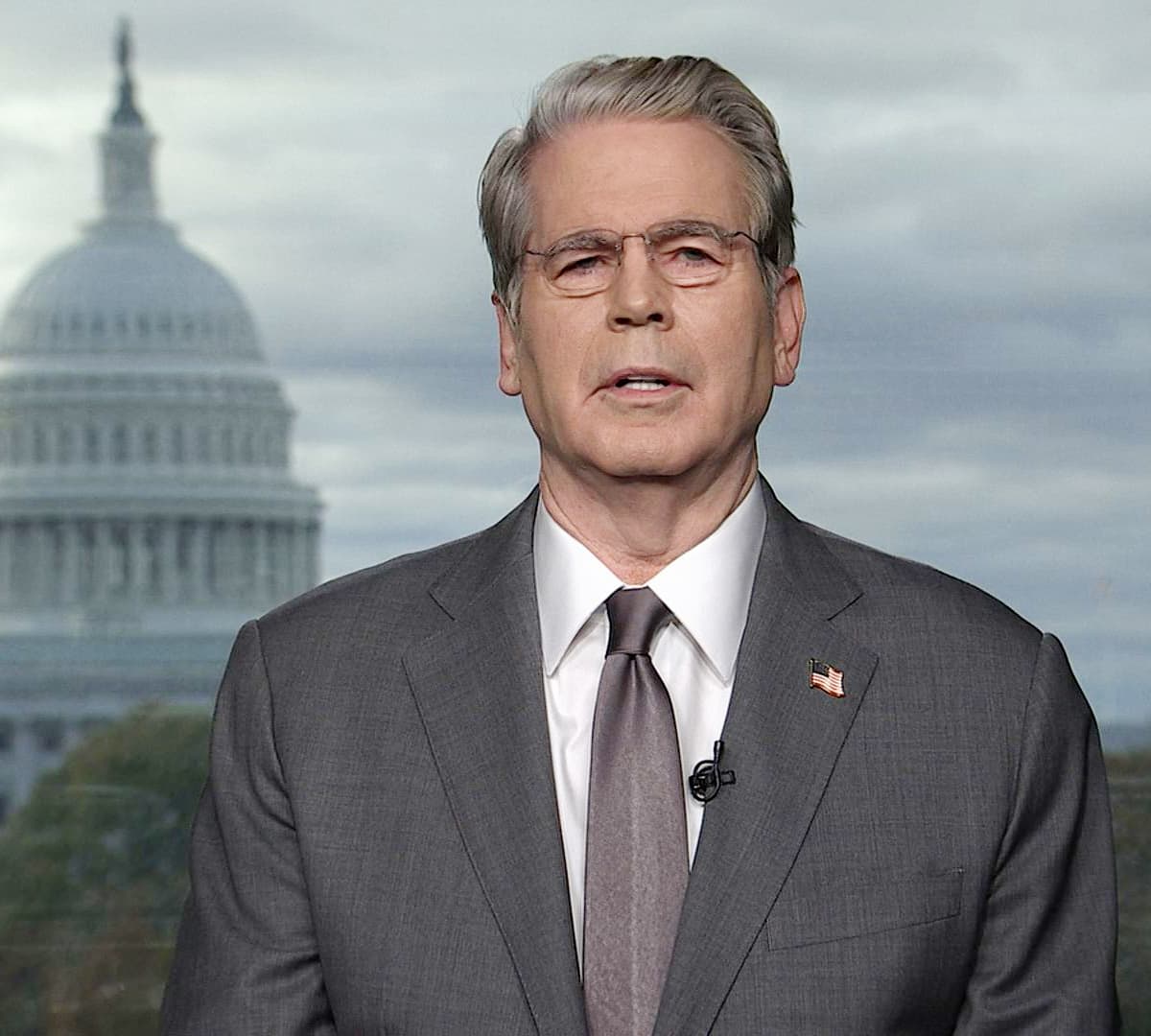
Treasury Secretary Scott Bessent said Friday that Jensen Huang, the former Nvidia CEO, was not mentioned in the Trump administration's latest talks with China. Asked on CNBC's "Squawk Box" whether Huang had come up, Bessent answered, "No," without elaborating. The report notes Huang is a close ally of President Donald Trump and faces allegations of an extramarital affair with a Chinese spy.
Bessent said U.S. policy allowing sales of Nvidia's H200 AI chips to China remains unchanged after the discussions. "We've already agreed that the H200s are the threshold level of chips that could be sold to the Chinese, and, you know, that continues as planned," he said. He added, "I wouldn't anticipate any change in the policy." His comments came after CNBC noted that Nvidia said it had stopped selling H200s to China.
The remarks followed Trump's trip through Asia, where he met Chinese President Xi Jinping and Russian President Vladimir Putin in Shenzhen. According to the report, the trilateral meeting was the first time the leaders of the three countries met without other countries' counterparts. The report says the summit appeared to yield few deliverables on the Ukraine and Iran wars or the AI race.
Bessent said Trump and Xi had a "robust discussion" on trade policy and AI. He said the two agreed that humans should stay involved in military decisions made by "super intelligence," which he abbreviated as "SI." He said the leaders agreed SI should not be allowed to act autonomously in major military actions.
Last week, Bessent criticized the "leakage" of U.S.-made AI chips to China. He blamed the Commerce Department, led by Secretary Howard Lutnick, for slow-walking export controls on suspected Chinese cut-outs such as Megaspeed, a Singaporean company the report links to Huang's scandal. Bessent said Commerce "has the pen" on those controls. On Friday, he declined to say whether he and Lutnick disagree on how aggressively to pursue export controls. He said, "I think we're all committed to following President Trump's instructions." He also said, "I think we are going to see that the proper chip restrictions are in place, and the remote access has been curtailed." The report notes Commerce recently took steps to close one of China's paths to accessing AI processors.