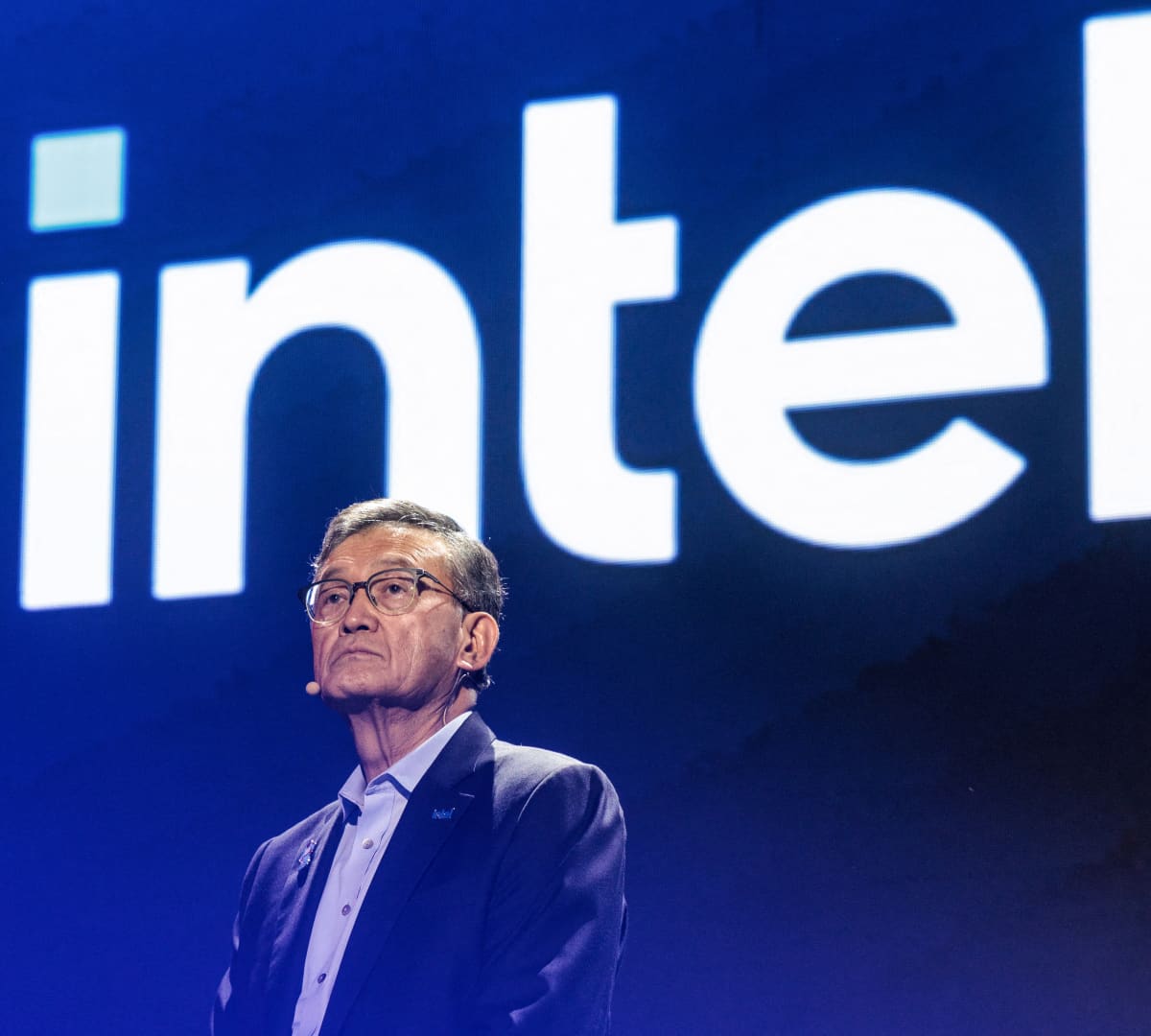
Intel shares plummeted in extended trading after the chipmaker issued a weak fourth-quarter forecast, blaming continued softness in the global PC market. The reaction was severe, and the company's own numbers explain much of it. Revenue did climb 21% from $13.7 billion a year earlier, but revenue in the client computing and physical AI group fell 5% to $8.1 billion, missing estimates.
The guidance is the more troubling figure. Intel expects adjusted earnings per share of 25 cents on revenue between $15 billion and $16 billion. Analysts polled by LSEG had expected $17.1 billion and 43 cents. Finance chief David Zinsner said the PC slowdown will continue at least through the first half of next year. That is not a short-term blip Intel can wave away, and investors who pushed the stock up roughly 150% this year were right to reprice the risk.
Intel's defenders will point to the data center and AI business, which jumped 78% to $7.3 billion, and to the chipmaker's role in agentic AI, where CPUs help orchestrate tasks. Those are real strengths. Oracle's expanded deal to deploy Intel's next-generation Xeon processors is a useful signal. But a company cannot grow its way out of a shrinking core business on promise alone, and the company itself acknowledged that an explosion at its Israel fab, which killed two workers, will cost about $600 million in lost revenue over two quarters.
The foundry story is where Intel's credibility is still being tested. Chief executive Lip-Bu Tan has taken a more cautious approach to spending than his predecessor, Pat Gelsinger, and that discipline may be warranted. Still, analyst Dan Hutcheson's point that customers want a second source to keep TSMC honest on pricing is exactly why Intel matters. Yet the company remains the only major customer of its 18A chip, and the Ohio fab, originally expected to deliver chips in 2025, is still in early construction.
My conclusion is that investors should demand proof before rewarding Intel again. The government's 10% stake and billions from Nvidia and SoftBank show strategic faith in the company, but faith is not revenue. Management should show a clear path back to PC margins, a named major foundry customer for 14A, and a timeline for the Israel fab ramp that holds. Until then, the stock's year-long rally looks more like a bet on a turnaround than a reflection of the business as reported.